
Breaking the Symptom Cycle
How to break the chronic illness symptom cycle

Life with chronic illness is complicated. You and I know all too well. We may blame our symptoms on disease. But chronic disease is only part of a vicious cycle that undermines our struggle for well-being.
I learned about the symptom cycle when I trained to be a chronic disease self-management master trainer. Each item in the symptom cycle feeds into the others. The loop is endless! You and I are not helpless!
If we break the cycle in any one place, all the other parts improve. We are not powerless!
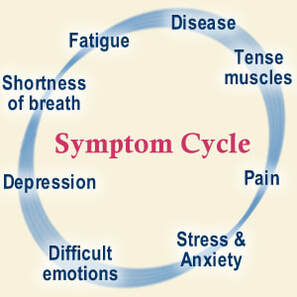
The good news is that if we break the symptoms cycle in one place, all the other parts are diminished. The bad news is that the symptom cycle is self-repairing. Develop the tools you need to break the cycle at any time!
What can you do?
Fatigue
Monitor your energy levels. Be realistic.
Rest before you are exhausted. Pushing extracts a price later.
Prioritize what you try to do. Let the rest go.
Pay attention to hydration and food.
Shortness of breath
Sit still and simply observe your breath.
Is your breathing shallow? Can you take a few deeper breaths?
Is there a medical cause, like asthma or COPD, that you can address with medication?
Tense muscles
Are your muscles tense? (My shoulders always pull up to my ears when I have tension.)
Where are you experiencing tension in your muscles?
Consciously tell each muscle to let go.
If you are able, stretching like gentle yoga, can help.
Pain
Where are you experiencing pain?
What makes you feel better or worse?
Does the pain come from difficult emotions or muscle tension?
Do you have medication that provides some relief?
Practice distraction
Stress and anxiety
Chronic illness is a source of stress and anxiety. You do not have to be a hero.
Powerlessness in the face of chronic illness is a common emotion.
Whether stress is real or comes from your thoughts, your body responds the same way. The “lizard brain” or amygdala cannot tell the difference.
Write down what causes stress for you. What can you control? What is beyond your control?
Depression
Depression is a normal stage of grieving the life that we lost or the life we dreamed. You are not flawed because you get depressed. You are normal.
Write your feelings in a journal. Journaling gets depressing thoughts out of your head and onto paper where they can be examined.
Consider professional help. You might need medication to feel well enough to engage in talk therapy. Only you know what you need. Asking for help is a sign of strength, not weakness.
Difficult emotions
Each of us experiences chronic illness in our own unique way.
Difficult emotions will come. Suppressing these emotions feeds them. Releasing these emotions starves them. Choose means of expression that are right for you.
Action
Look at the symptom cycle again. What bothers you the most? Choose a tool and use it. Evaluate the results.
Journal Prompts
What insights have you gained from the symptom cycle? How can understanding the symptom cycle help you manage your chronic illness?
Suggested Reading
Learn more about the symptom cycle and other strategies in this amazing book!